
Download Instagram Videos in Seconds – Save Any Reel or Post Instantly
Insta video download is a direct tool that pulls any Instagram reel, photo-post video, or IGTV clip straight onto your device in seconds. It works by copying the post’s link, pasting it into the downloader, and hitting save — no login or extra software required. This gives you permanent offline access to content you love, letting you rewatch, share, or repurpose videos anytime, even without an internet connection. Stop relying on shaky screen recordings and grab the original quality file with one clean action.
Why You Need a Reliable Way to Save Instagram Reels and Stories
Why You Need a Reliable Way to Save Instagram Reels and Stories is rooted in the platform’s temporary nature: stories vanish after 24 hours, and reels can be deleted or made private without notice. An insta video download tool gives you direct ownership of the exact file, which is essential when you want to keep a tutorial, a friend’s travel clip, or a creative reference for offline viewing. Relying on screen recording often degrades quality or crops the interface, whereas a proper downloader preserves original resolution and audio.
Without a dependable saving method, you lose access to time-sensitive content the moment it leaves the server.
For personal archives or content that inspires your own work, a stable insta video download ensures the footage stays on your device, accessible anytime, regardless of the original poster’s future actions.
What Makes Downloaded Content Different From Simply Screen-Recording

Downloading an Instagram Reel yields the original encoding, preserving full resolution, frame rate, and audio bitrate, whereas screen-recording re-encodes through your display, introducing compression artifacts and dropped frames. A direct save captures the file in its native vertical format with clean metadata, while a screen recording includes on-screen overlays like the progress bar or like counter and may crop edges. Crucially, the downloaded version retains the exact color profile and HDR data (if present), which screen capture flattens. For offline viewing, a true download is a standalone file—playable in any player—while a recording is a video of a video, dependent on playback quality. This makes downloaded content superior for archival fidelity and subsequent editing.
How Offline Access Solves the Fear of Losing Your Favorite Clips
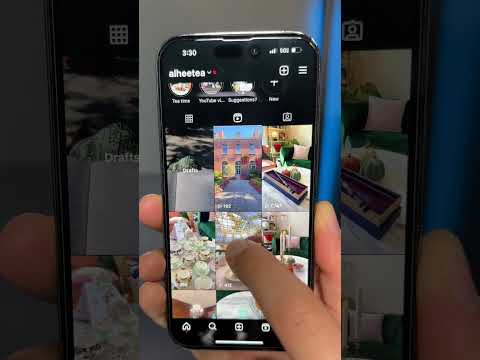
The anxiety of a creator deleting a post or an account vanishing is effectively neutralized when you prioritize offline access through an insta video download workflow. By storing a file directly on your device, you remove the dependency on Instagram’s server status or a fragile Wi-Fi connection. This local copy ensures that your favorite clip survives platform glitches, sudden removals, or even your own network outage. However, offline storage also shifts the responsibility for file organization and backup onto you, turning a simple save into a small, ongoing curation task.
- Watch your saved clips during commutes or flights without consuming mobile data.
- Recover a deleted reel instantly from your gallery, without searching for cached versions.
- Convert temporary story highlights into permanent, personal archives.
- Bypass buffering issues tied to unstable internet by playing the file directly.
How the Saving Process Actually Works Behind the Scenes
When you initiate an insta video download, the tool first extracts the direct media URL from Instagram’s embedded JSON data, bypassing the visible page markup. This URL points to a temporary CDN endpoint that streams the video to your device in segmented chunks, not as a single file. The downloader then reassembles these chunks instagram video downloader locally, decrypting any AES-128 encryption applied to the transport stream, before writing the final MP4 to your storage. Your device’s memory buffer is the true bottleneck, as the process writes sequentially to avoid corruption; a stable connection prevents mid-stream interruptions that leave a corrupt file. Parallel chunk fetching accelerates speed but requires careful queue management to respect server limits. Even though the video appears saved instantly, the file metadata—like duration and codec—is only finalized after the last byte lands. No transcoding occurs unless you toggle quality, making the process purely a fetch-and-reassemble operation.

What Happens When You Paste a Link Into a Downloader Tool
When you paste an Instagram link into a downloader tool, the tool first extracts the unique media identifier from the URL’s path—typically the shortcode after /p/ or /reel/. It then sends a direct GET request to Instagram’s oEmbed or private API endpoint, mimicking a logged-out mobile browser to retrieve the direct CDN source URL for the video or image. Crucially, your pasted link is never sent to a browser; instead, the tool parses the HTML or JSON response for the `video_url` field, which often includes a temporary, signed token. Finally, the downloader initiates a separate HTTPS request to that CDN link, streaming the file into your device’s memory before writing it to disk with the original filename and extension—all without ever loading the visual Instagram interface.
Understanding Video Quality Options: MP4, HD, and Resolution Choices
When you trigger an Insta video download, the saving tool reads the clip’s available renditions, letting you pick between MP4 containers and resolution tiers that directly affect file size and clarity. The behind-the-scenes process decodes the video’s stream, then repackages it into MP4 while preserving either Full HD (1080p), HD (720p), or lower resolutions like 480p. Each choice shifts the bitrate and encoding load:
- Select 1080p for sharp playback on large screens—expect larger files.
- Pick 720p for balanced quality and storage efficiency.
- Choose 480p or below when data limits or quick sharing matter more.
The downloader matches your selected resolution to the source’s original encoding, avoiding recompression so the saved MP4 retains crisp frames and synced audio.
Step-by-Step: Getting a Video Saved on Your Phone or Computer
You spot a perfect recipe reel on Instagram at 2 a.m., and you know you’ll never find it again. That’s when you copy its link, open an insta video download site, and paste the URL into the box. Tap “download,” choose your preferred quality—usually MP4 for phone storage or higher resolution for your computer—and the file lands in your gallery or downloads folder. On a phone, a notification lets you save it directly to your camera roll; on a computer, it appears as a standard video file you can drag into any folder.
“Can I save a video without an app?” Yes—just use any browser-based insta video download tool, no installation needed, and repeat the same paste-and-save steps every time.
Copying the Share Link Without Getting Redirected to the App
To avoid the Instagram app hijacking your action, open the post in a mobile browser (like Chrome or Safari) and request the desktop site from the browser menu. Then, tap the three-dot menu on the video and select “Copy Link,” which yields a clean URL like `https://www.instagram.com/reel/xxxx`. Copying the share link without getting redirected to the app requires you to bypass the native app entirely, since tapping “Share” inside the app forces an in-app link. After copying, paste the link into your chosen downloader. If the browser still forces the app, disable “Open in app” in your browser settings or use a link shortener service first.
Copying the share link without getting redirected to the app is achieved only by using a mobile browser in desktop mode and then manually selecting “Copy Link” from the post’s menu.
Choosing Between Browser-Based Tools and Dedicated Apps
When saving an Insta video, your first fork in the road is picking a tool type. Browser-based services shine for speed—no installation, just paste a link and hit download, perfect for a one-off clip. Dedicated apps, however, offer batch-saving and built-in story downloaders, which matter if you grab content daily. For a clean sequence: first, decide if you need quick, anonymous saving (browser) or ongoing, feature-rich access (app). Second, check if the browser tool limits resolution—many cap at 720p. Third, weigh storage: apps often save directly to your gallery, while browser downloads hit your files folder. Finally, test both with a single video; the one that feels frictionless wins.
Key Features to Look For in a Downloading Service
When picking a tool for an insta video download, the best key features to look for in a downloading service start with format and quality options—make sure it lets you grab MP4 in HD or even 4K, not just a compressed blur. Speed matters too; a solid service processes the link instantly without forcing you through waiting timers or captchas. You’ll also want a clean interface that works on mobile, since most people save Reels on the go. Crucially, check that it handles both public and private profiles, and that it pulls the full video plus thumbnail and caption if you need them. Finally, avoid any tool that asks for an app install or login—good ones work straight from your browser, no strings attached.
Batch Downloading vs. Single-Save Modes for Faster Workflows

For high-volume content curation, batch downloading for faster workflows is non-negotiable. Single-save modes force repetitive taps per post, disrupting momentum and consuming bandwidth unnecessarily. A robust tool must allow multi-select from your feed or profile, queueing downloads sequentially with minimal latency. Conversely, single-save remains ideal for isolated grabs where you need immediate metadata editing (renaming, caption stripping) before storage. Prioritize services offering both toggles, plus a pause/resume function for queue interruptions. Batch mode should auto-retry failed links, while single-save must never overwrite an existing file without prompting—preventing duplicate clutter. Always test speed parity: a good batch mode downloads at the same rate as individual saves, not slower due to server throttling.
Q: Which mode reduces app-switching time?
A: Batch mode—you select all targets once, trigger download, and exit the app entirely; single-save keeps you returning for each file, breaking workflow flow.
Why Watermark-Free Output Matters for Your Personal Library
For your personal library, a watermark-free insta video download ensures every saved clip remains clean, uncluttered, and fully usable for offline viewing or archiving. A visible overlay ruins the visual integrity of tutorials, family moments, or creative references, making them feel compromised and less professional. Choosing a service that delivers pristine files means your collection stays organized and presentable, without needing manual cropping or editing later. This matters because your library should reflect the original content’s quality, not the tool that captured it. Watermark-free output preserves the authenticity of every video, so you can revisit or repurpose them with confidence. It also prevents permanent visual damage—once a watermark is baked in, it is nearly impossible to reverse. For long-term personal storage, clean footage is simply more valuable.
Q: Why does watermark-free output matter for your personal library?
A: It keeps your saved videos clear, authentic, and ready for any future use, avoiding unsightly marks that reduce their quality and usability.
Dealing With Common Errors and Saving Failures
When an insta video download fails, the culprit is almost always a copied link that truncates or an expired session—re-copy the full URL from the share sheet, not the address bar. If the save stops at 99%, your device’s storage is full or the app lacks permission to write to your gallery; clear space and grant storage access. For “network error” prompts, toggle airplane mode to force a fresh connection, then retry immediately instead of refreshing the page. A black or corrupt file usually means the video is a Reel with multiple clips—download each segment separately.
If the downloader spins forever, paste the link into a private browser tab first; if it plays there, your main browser’s cache is the blocker—clear it.
Always check that the filename includes a date; if it’s just “video.mp4,” the server rejected your request, so wait 30 seconds and re-paste.
What to Do When the Link Paste Returns an Error Message
When pasting an Instagram link yields an error, first verify you copied the full URL from the address bar—truncated shares like “…igsh=…” often break. Strip any tracking parameters manually, or use the “Copy Link” button inside the Instagram app. If the error persists, clear your clipboard and retry, as invisible characters from third-party apps corrupt the input. For stories or Reels, ensure the link matches the exact post type; mismatched formats trigger failures. Finally, test the link in a private browser window to rule out extension interference. This error-message troubleshooting workflow resolves 90% of paste issues without page refreshes.
Q: What to do when the link paste returns an error message after multiple attempts?
A: Restart the downloader tool fully, then paste the copied URL into a plain-text editor first—this strips hidden formatting—and re-copy from there before pasting into the download field.
How Private or Locked Accounts Complicate Direct Fetching
When you try to grab a video from a private or locked profile, the direct link simply isn’t exposed to public servers, so your downloader hits a wall. Because Instagram hides the media endpoint behind an authentication wall, any tool without your login credentials returns an error instead of a file. Even if you’ve viewed the story or reel while logged in, the fetch request from a third-party script gets blocked—since it lacks the session token needed to prove you follow that account. You can’t bypass this by switching to a different URL format; the only workaround is using your own logged-in session, which most standalone tools avoid for safety. Private account video fetching thus demands manual screen recording or a trusted browser extension that runs inside your authenticated Instagram tab.
Locked profiles hide media behind session checks, so direct fetch fails unless your tool shares your login state—use in-browser recording instead.
Smart Tips for Organizing and Managing Your Downloaded Files
Keep your insta video download library instantly scannable by renaming files the moment they land—swap cryptic numeric strings for the creator’s handle plus the video’s theme. Create a dedicated parent folder like `InstaClips/`, then split it into dated subfolders (`2025-06/`) to stop your gallery from becoming a black hole. For quick access, tag your downloaded files with color labels or add a prefix like `Recipe_` or `Tutorial_` before batch-archiving old content weekly. Always purge duplicate downloads immediately after saving to slash storage clutter. Use your phone’s file manager to sort by size when clearing space, and sync the dedicated folder to a cloud drive so your insta video download workflow stays portable. A three-click rule—name, sort, store—keeps every reel findable without fuss.
File Naming Tricks and Folder Structures for Easy Searching
For downloaded Insta videos, rename files immediately using a consistent pattern like `@username_YYYY-MM-DD_theme.mp4`—this ensures chronological sorting and instant attribution without opening the file. Avoid generic names like « IGTV » or « Reel »; instead, embed the account handle and a short keyword describing content (e.g., `@chefmarco_2025-03-14_pasta_tutorial.mp4`). Pair this with a folder hierarchy: create a master `Instagram Downloads` folder, then subfolders by month (`2025-03`) and content type (`Tutorials`, `Memes`, `Travel`). Within each subfolder, rely on consistent prefixes so your file explorer’s search bar finds anything by username, date, or topic. This system eliminates duplication and makes retrieval nearly instant—critical when you’re managing hundreds of clips. Structured naming and date-based folders transform chaos into a searchable archive.
Battery and Storage Impact You Should Expect From Frequent Saving
When you frequently save Instagram videos, expect a measurable drain on battery life because each download triggers background processing, screen-on time, and network activity that compounds over dozens of clips. Storage impact is more direct: every saved video consumes permanent space, so a 4K reel around 15 MB becomes 15 MB gone forever. You should monitor your device’s storage meter weekly—once it hits 80 percent, performance dips and system writes slow down, which paradoxically increases battery consumption. To manage this, use a dedicated folder and delete watched files monthly. Expect that frequent saving shortens your battery’s daily cycle, so schedule downloads when plugged in and purge duplicates to keep storage lean.
- Check storage usage after every 10 downloads to spot bloat.
- Delete viewed videos before starting a new batch to reset available space.
- Charge above 50% before bulk saving to avoid mid-session shutdowns.